Palladio Partners Infrastructure Outlook for H2 2026: Infrastructure investments will increasingly generate value at interfaces where capacity is tight

10.09.2026 - Network connections, approvals, construction capacity and robust long-term purchasing agreements will increasingly determine which projects are investable
While the need for long-term investment in infrastructure remains high, the market environment is becoming more challenging for investors. That’s the conclusion drawn by Palladio Partners in its latest infrastructure outlook for the second half of 2026. Institutional capital is available and public investment programs are creating additional project pipelines, but the main bottleneck is shifting from financing to actual implementation. At the same time, value creation is moving to access to interfaces where capacity is scarce.
In its infrastructure outlook at the beginning of the year, Palladio Partners pointed out that infrastructure is increasingly becoming a strategic factor in location and competitiveness. Expansion of data centers, electrification of industrial processes and modernization of energy and transport networks are currently top of the agenda for economic and industrial policy. However, it is becoming even more clear than at the beginning of the year that capital and political support alone are not enough. More and more often, the key challenge lies in the actual implementation of projects.
“Our fundamental investment assumption for infrastructure remains unchanged. Electricity, data and transport networks are urgently needed, and capital is available for their expansion. At the same time, we are seeing more and more clearly that capital alone does not get projects realized,” said Dennis Schnutenhaus, partner and member of the management team at Palladio Partners. “Network connections, approvals, construction capacity and robust purchasing agreements are increasingly determining which projects we can actually invest in.”
EUR 500 billion will create opportunities – but not finished projects
The Special Fund for Infrastructure and Climate Neutrality will make EUR 500 billion available over 12 years, of which around EUR 58 billion will be in 2026. The additional funds will expand the project pipeline, but this must be balanced against limited planning and construction capacity and protracted approval and procurement processes, the authors say.
That means that secure access rights, reliable income models and operational expertise are becoming more important to investors. “It's not enough to rely on the large need for investment,” said Steffen Reeser, a partner at Palladio Partners. “What is critical is being able to secure scarce capacity, implement projects and manage risks in the long term.”
Value is increasingly being generated at bottlenecks and interfaces
According to Palladio Partners, one key trend is becoming more apparent: the intertwining of infrastructure segments that would previously have been looked at in isolation. Data centers need electricity generation, grids and storage systems, while electric commercial vehicles need high-performance grid connections and digital fleet management and renewable energies need storage systems and flexible electricity demand (the term “integrated energy” is also used).
This is also leading to a shift in value creation. Economic value lies less in isolated assets than in access to interfaces where capacity is tight – such as grid connections, space, storage systems and secured long-term purchasing agreements.
In this context, the new infrastructure outlook looks at four main areas of investment:
- Digital infrastructure: Demand for data centers remains high, but secure access to electricity and established long-term demand are becoming more important than speculative building of capacity. In the fiber optics market, the focus is shifting to consolidation and monetization of existing networks.
- Transport: Investments of billions in the rail and transport sectors are creating long project pipelines. Investors are particularly interested in logistics hubs where capacity is scarce, charging infrastructure where utilization of capacity has been secured and availability-based income models.
- Energy: The focus of investment is shifting from simple electricity generation to grids, storage systems and flexibility. Grid connections are becoming increasingly scarce and valuable, while the hydrogen market remains selective and strongly contractually driven for the time being.
- Waste management and the circular economy: Long-term municipal contracts can facilitate defensive cash flows. At the same time, a fragmented market and increasing requirements for recycling open up opportunities for strategies based on platforms and consolidation.
Palladio Partners’ conclusion: The second half of 2026 is not a market for blanket infrastructure investments. The need for structural investment remains significant. However, investments that combine operational improvements, contractual quality and access to scarce resources are likely to be more successful.
You can find the full Infrastructure Outlook for H2 2026 with detailed investment assumptions here.
Years of expertise. Proven results.
A wide range of example investments highlights the effectiveness of our approach.
 Read more
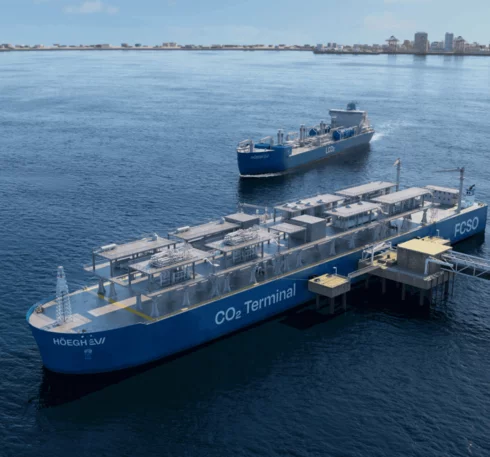
Floating Energy Security: Our Co-Investment in Höegh Evi
17.08.2026 - When an LNG tanker docks at a floating regasification facility, it becomes clear what energy security means in practice. Through our…
 Read more
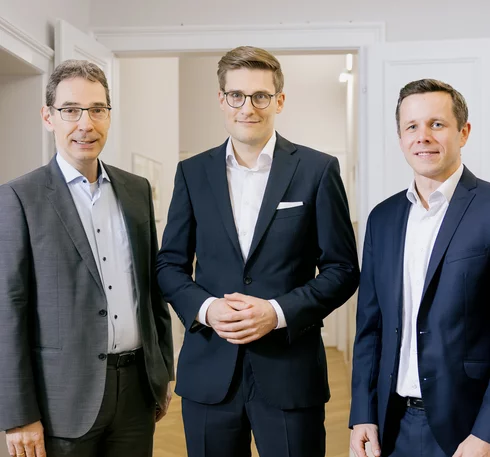
More than EUR 1 billion in capital commitments for private markets funds
01.06.2026 - First significant interest from abroad | Palladio Partners now manages over EUR 11 billion in infrastructure, private equity and private…
 Read more
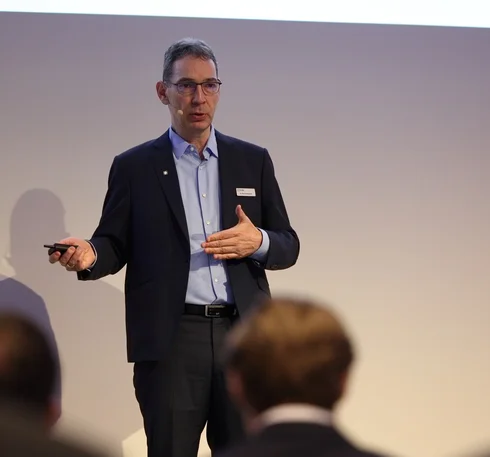
Infrastructure investments – a stable anchor in a volatile environment
12.05.2026 - Even in the current geopolitical situation, institutional investors at the Palladio Partners Investors Day confirm that they are…
 Read more
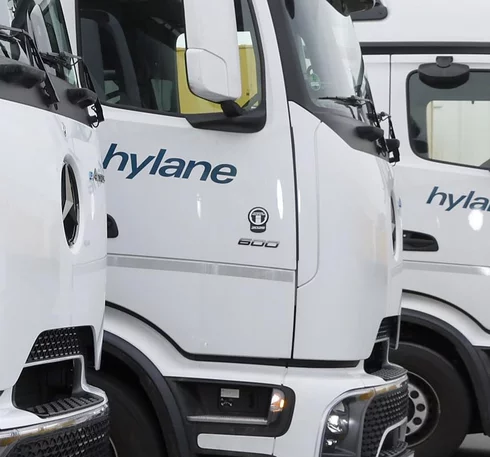
Palladio Partners invests in hylane
16.12.2025 - Leading Zero-Emission Truck Leasing Platform Secures New Investor and Accelerates Growth Plans
 Read more
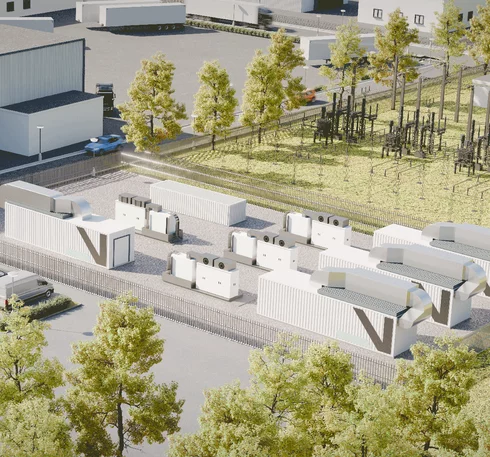
Palladio Partners and Voltfang launch battery storage system partnership
19.09.2025 - The partnership aims to develop and commercialize battery storage systems across Germany with an investment volume of approximately EUR…
 Read more
First YEXIO Data Centre in Heiligenhaus enters Operation
11.09.2025 - Sustainable Digital Infrastructure for the Düsseldorf–Essen–Wuppertal Region • State-of-the-art digital infrastructure for a…